


Gut-Directed Audio Therapy
Soothe Stress Nausea & Acid Reflux Without Fear
It is completely understandable to feel your stomach tie in knots when stress hits. But this isn't just nerves—this intense physical anxiety can lead to severe stress nausea, sudden acid reflux, and a complete loss of appetite where even small meals feel impossible. You are not alone in this experience, and there is a gentle, science-backed way to untie those knots and bring comfort back to your body.
Hear the Natural, Calming Voice.
Experience the calming, professional guidance designed to soothe your nervous system.
"I feel a constant tight knot of tension in my stomach and cramping from stress. "
Use headphones for the best experience.
Listen to how the session targets physical symptoms directly.
In this sample, notice how the guidance speaks directly to the "knot" in the stomach and uses warmth to signal safety to the gut-brain axis. This isn't generic relaxation; it's targeted relief.
When you feel anxious, your brain sends a "fight or flight" warning down the Vagus nerve directly to your digestive system [1]. Think of this like a faulty car alarm that goes off when the wind blows. Your body pauses digestion because it thinks you need to run away, which leaves stomach acid sitting in place and makes the thought of food feel overwhelming. Studies show that this gut-brain connection is powerful, making normal digestion feel incredibly uncomfortable [2]. But remember, this sensitivity often happens even without a specific stressful event because your baseline gut awareness is heightened. Psycholux is a science-backed online tool that trains your Vagus nerve to quiet this false alarm [3]. It is not just a quick band-aid; it is daily training that reduces the constant alertness of your body so you can ease discomfort and enjoy your meals again.
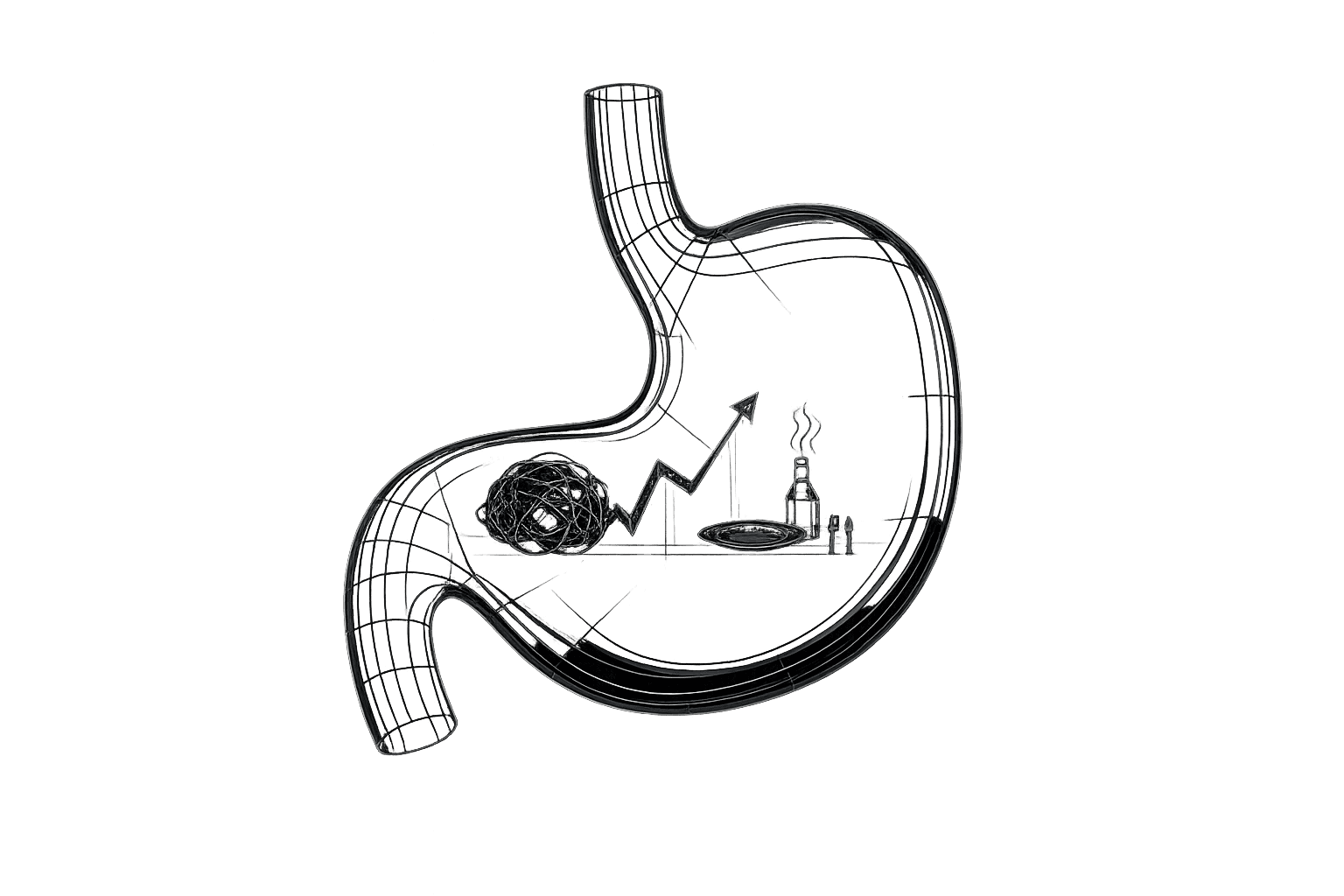
Your Relief Protocol
3 steps to calm your system right now.
1. Use Acute Audio Relief
The fastest way to soothe the alarm is to listen to a Psycholux session. This audio therapy helps calm the nervous system and eases discomfort so your appetite can gently return.
2. Try 4-7-8 Paced Breathing
Inhale deeply for 4 seconds, hold for 7, and exhale slowly for 8. This sends a direct, physical signal to your Vagus nerve that you are safe, allowing your stomach muscles to release tension.
3. Sip Gentle, Warm Liquids
Instead of forcing a heavy meal when your stomach feels tight, try sipping warm ginger tea or bone broth. The warmth helps relax the digestive tract and prepares your stomach to accept food without triggering acid reflux.
Evidence-Based Research
[1] PubMed Central: Impact of Psychological Stress on Irritable Bowel Syndrome
[2] Michigan Medicine: How Gut-Directed Hypnosis Helps GI Disorders
[3] PubMed Central: Gut-focused Hypnotherapy for Functional Gastrointestinal Disorders
[4] Frontiers in Psychology: Gut-directed Hypnosis and Hypnotherapy for IBS
Real Relief for Real People
I tried everything for my stomach cramps. This was the first thing that actually helped me relax the knot.

Sarah J.
Verified User
The part where it mentioned my personal struggles was the best. It's so much more specific than the generic meditations I have on my phone.

Emma
Verified User
I finally had a few minutes to myself to just sit and not solve anything. I pressed play, and it completely drew me in. The voice is gentle, kind, and feels very natural. It turned a quiet moment into a deep relaxation.

Jessica
Verified User
Frequently asked questions
Other triggers you might face
Stop Nighttime Stomach Churning & Fall Asleep
Wake up to a calm gut. Discover how science-backed audio therapy soothes nighttime stomach churning and eases gut anxiety so you can finally rest.
Soothe Chest & Throat Tightness After Eating
Discover how to ease chest and throat discomfort after meals by calming the vagus nerve. Try our science-backed audio therapy for gentle, fast relief.
Soothe Sudden IBS Flare-Ups When Relaxed
Experiencing an IBS flare-up out of nowhere while completely relaxed? Discover how to soothe sudden gut discomfort with science-backed audio therapy.